ELECTMINDY.COM
ELECTMINDY.COM
  • Home
  • Donate
  • Press Releases
  • Issues
  • Meet Mindy
  • Endorsments
  • Contact Us
  • Gallery
  • Videos
  • More
    • Home
    • Donate
    • Press Releases
    • Issues
    • Meet Mindy
    • Endorsments
    • Contact Us
    • Gallery
    • Videos
  • Home
  • Donate
  • Press Releases
  • Issues
  • Meet Mindy
  • Endorsments
  • Contact Us
  • Gallery
  • Videos

With A Vision- There Is A Future!

Oakland Has A Great Future!


The Miracle Man

Scenes from the American System 

Robert IngrahamJul 5, 2026 


Henry Kaiser at the Richmond Shipyards


Henry J. Kaiser (1882–1967) — the Miracle Man. The man who accomplished—again and again—what others insisted was impossible. In addition to his personal virtues, the story we focus on here is the unprecedented explosion of production which he helped lead. Looking back on those years, what was done seems almost unbelievable today. But it happened. Kaiser’s triumphs weren’t achieved through magic. This was the American System, led by a man of courage and genius.


The son of immigrants, born in a small upstate New York town along the Erie Canal, Henry Kaiser epitomizes what the American Dream meant for immigrant families. His family was semi-impoverished, and Henry left school at the age of 13 to find employment. He never attended high school. His first job was a clerk at a dry-goods store where he made $1.50 per week. He became fascinated with photography, and at 15 years old found employment at a photography studio. For the next 10 years he led a somewhat nomadic life, traveling extensively, continuing his work in photography but also holding a variety of jobs, including a stint working in a brickyard, where he was exposed to the harsh realities of manual labor.


In 1906 Henry relocated to Spokane, Washington and became a hardware salesman. After a few years, he went to work for the J.F. Hill Company, a paving and road contractor. This was at a time when the explosion of automobile ownership had created a nationwide demand for more paved roads. In 1914 Henry formed his own construction company, and between 1914 and 1931 he became the leading road-builder in the Pacific Northwest. By 1931 Henry was 49 years old, and one might assume that road-building had defined his adult career, but he was just getting started.


Henry acquired a reputation for completing contracts with remarkable speed and at a lower cost than his competitors. One reason was that he developed an uncanny skill at coordinating the flow of workers and materials. He also adapted new technology to his construction techniques and he pioneered several inventions which had implications beyond the realm of road-building. In 1916 his company bid on and won the contracts to develop two irrigation projects, both in Oregon. These were, by far, the largest and most ambitious projects he had attempted up to that time. Then in 1926 he won the contract to build the Philbrook Dam in northern California. This would be the turning point of his career.


Kaiser had never built a dam. His partner in the project was Robert LeTourneau, a brilliant inventor of construction equipment and another un-sung hero of the American System. Experts predicted it would take two years to build the Dam. Kaiser and Le Tourneau did it in four months. LeTourneau’s mechanized “Earth Movers” were critical to achieving this speed, as more than $150,000 worth of mechanized equipment were used. These included tractors, powered shovels, a deep subsoiler (to rip up the hard ground) and much more. A 15 mile road was built to bring the mechanized equipment in from the nearest railroad junction. What was not found anywhere on the work site were horses and mules, which were standard at construction sites up to that time.


Kaiser also made sure that the worksite included tents, stoves, bedrolls, food and medical care for his workforce, another priority which became standard on all of his future projects. In his book Mover of Men and Mountains, Robert LeTourneau describes the significance of the Philbrook Dam:


“The Philbrook Dam was a milestone in the engineering business and in my life. It was the first major project in which the new broke entirely away from the old. There was not a mule on the site. We were still using men with shovels and pick axes for clean-up work, but the heavy labor was done with power shovels, mechanized dump trucks and, in the starring role, my scrapers. From the start it was clear that nothing short of an earthquake would stop us from setting an all-time record in dam building.

“For my part, I was getting lessons from a master organizer. At onetime we must have had 1,000 men on the job, with some crews working on digging and others on hauling, and some on concrete mixing, and others on 57 varieties of odd jobs. Kaiser had that big job timed to perfection. More, he knew how to get along with men even when the men didn’t know how to get along with each other.

“The speed with which we completed the Philbrook Dam astonished the construction world, and Kaiser was swamped with offers of even bigger jobs”¹

The Greatest of Dam Builders


The proposal to build a dam on the Colorado River, for flood control, irrigation and hydroelectric power had been authorized by Congress in 1928, but it was not until 1931 that the Hoover administration made the decision to move forward with construction. The scope of the project was far too large for one company, so Kaiser spearheaded the formation of Six Companies, Inc., a joint venture that brought together six major construction firms, including the Kaiser Construction Company, the Bechtel Corporation,² the Morrison-Knudsen Company and the Utah Construction Company. Kaiser personally directed the construction of the Hoover Dam and he would serve as Chairman of the Executive Committee for the Six Companies from 1931 to 1936,


The Hoover Dam was to be the largest Dam in the world, the largest ever built in human history. The project would have to tame the mighty Colorado River, which one engineer at the time characterized as a “torrent of red mud roaring through Black Canyon with the speed of a railway train.” The entire project would have to be carried to completion in a remote desolate location, under brutal conditions. During the long summer months daytime temperatures averaged 120◦ Fahrenheit, and during the summer of 1931 a dozen workers died of heat prostration in one week alone.


The project was straightforward:— build a dam more than 700 feet (60 stories) high and 660 feet wide at its base, with a reservoir 110 miles long and the foundations for a 1.2-million-horsepower hydro-electric plant that would generate enough electricity to illuminate seven states.


The job was so immense that nobody could predict the materiel and labor required for each phase. Eventually, more than 4.5 million cubic yards of concrete were used, more than the U.S. Bureau of Reclamation had used in all previous federal construction jobs combined. An entire town (Boulder City) had to be built to house the 10,000 workers. Electricity and fuel had to be brought to the site. A railroad was built to bring in the machinery, equipment, raw materials and building supplies.


The engineering challenges were unprecedented, and the solutions were not to be found in textbooks. The builders had to combine current knowledge with imagination and creative insights. No one personified this more than Henry Kaiser, and his approach was hands-on. He visited the site repeatedly, driving thousands of miles round-trip from his home in Oakland. By the spring of 1931 Kaiser knew the canyon better than anyone but job superintendent Frank T. Crowe.


The Hoover Dam was completed in 1936, two years ahead of schedule, and under budget by $4 million. It provided enough water to irrigate 1 million acres, and its generators produced 4 billion kilowatt-hours of electricity each year (compared to the 16 million kilowatt-hours generated by Niagara Falls).


In September 1935, President Franklin Roosevelt visited the worksite of the near-complete dam. In his remarks, he said:


This morning I came, I saw, and I was conquered as everyone will be who sees for the first time this great feat of mankind. This is an engineering victory of the first order, another great achievement of American resourcefulness, skill, and determination.”

The Bonneville and Grand Coulee Dams


Even while construction on Hoover Dam proceeded, Henry Kaiser had already proposed the next great project to his partners in the Six Companies—a dam across the Columbia River in Oregon. Initially, almost all of them opposed this.


The Columbia was treacherous, swift and deep. With a maximum flow of one million feet per second, it was five times as powerful as the Colorado River. Unlike the Hoover Dam site, there was no canyon of solid rock to form a bottleneck and the riverbanks were soft and far apart. There was no way to build diversion tunnels as at Boulder. Most who had studied the proposed site at Bonneville declared that erecting a dam at that location was impossible. As Kaiser said later, “My associates said, ‘You are going to break your heart. That can’t be done. It just can’t be done’. Some of my most intimate associates sat up with me until 4 o’clock in the morning and said, ‘Just don’t try that one.’”


Henry’s son, Edgar Kaiser, would later say:


“Bonneville was without question the most difficult construction project we have ever built. At the start there were no specifications, not even a solid plan. Engineers had to improvise as we went along. There were constant changes. Nothing ever stayed put. One stormy night when the water was high and really roaring, I was afraid we were going to lose our cofferdam so I phoned a supervisor at the dam site, a short distance upstream. ‘Everything is OK’, he reported, ‘I think we’re going to be all right’. Just then, I looked out the window and saw a dark mass approaching. It was one of our cofferdam cribs floating down the river. With it went the unlimited hours of work of hundreds of men. This was a real tragedy. But the will and determination of the men of the camp were unbroken. We could turn from that tragedy back to the drawing board, knowing that we would build again, and yet again, if it happened that way.”

Kaiser was convinced that the team that had built Hoover could build Bonneville. He had assembled a trusted team, including his son Edgar, Clay Bedford, and chief engineer George Havas. The Bonneville Dam—an immense 1,027-foot dam holding back a larger volume of water than Boulder Dam— took four years to build, but it was finished one year ahead of schedule. In addition to electric power generation, the Bonneville Dam was one of the most successful projects in flood control ever built. “They said it couldn’t be done,” Kaiser remarked, “but my kids went ahead and did it.”


Even while the Bonneville Dam was under construction, and before the Hoover Dam was complete, Kaiser bid on a third dam project, what became the Grand Coulee Dam, 350 miles east of the Bonneville Dam, on the Columbia River. He won the bid for the second (construction) phase of the project. Again, it was an enormous undertaking.


At 550 feet tall, the Grand Coulee Dam was somewhat shorter than Hoover, but, at 4,173 feet, it was much wider. It was, up to that time, the largest structure ever built. Three times the concrete used on the Hoover Dam project was needed. To hold back the enormous water pressure, the walls of the Dam were 550 feet thick. Behind the Dam, a reservoir named Lake Roosevelt stretched for 151 miles, with an average width of 4,000 feet and depth of 375 feet. The Dam provided hydro-electric power and water for irrigation through an extensive network of canals.


Toward the end of the 1930s, Kaiser, Bechtel and some of the other partners took on a series of other projects, including the Shasta Dam in northern California. The Six Companies lost the bid for Shasta Dam, but Kaiser (on his own) bid successfully for the contract to supply all the sand, gravel, concrete and cement for the project. At the time Kaiser didn’t own a cement factory and knew nothing about making cement. This put him into the cement business, and this was to be his first entry into industry, as opposed to construction. Later, during World War II, his concrete plant supplied most of the concrete used by the military in the Pacific Theater.

Shasta would prove to be Kaiser’s swan song in dam building, and simultaneously the end of his career in construction. By 1940 he began a second career in manufacturing, and his accomplishments were to prove even more dazzling.


Revolutionary Ship-builder


“What man can conceive and imagine he can accomplish. Impossibles are only impossible as thinking makes them so.”
— Henry J. Kaiser

Henry Kaiser’s relationship with the Roosevelt administration was somewhat complicated. On the one hand he and Franklin Roosevelt developed a very close personal bond, but his dealings with many administration officials were often strained or even hostile. Many of the “New Dealers,” e.g., Harold Ickes, considered him an outsider and didn’t want to work with him. Then, when the World War II mobilization arrived, he found himself in constant conflict with William Knudsen, head of the War Production Board, and Jesse Jones, head of the Reconstruction Finance Corporation. They generally viewed him as the “wild man” of dam building with no experience in manufacturing, and both were very leery to allow him a major role in the war mobilization.

Kaiser’s view was that he and his team could accomplish the impossible, even in a field they knew nothing about. And he would prove that this was true.


Kaiser’s opportunity appeared with a plea from the British. By the winter of 1939/1940 German U-boats were sinking British merchant ships three times faster than they could be replaced. Winston Churchill made a desperate appeal to FDR that the United Kingdom needed 60 new freighters. He stated that without these ships Britain would face starvation, and the war would be lost. He asked, ‘could America help’?


The reality was that American shipyards had never built that many ships in so short a time. At the same time, the nation’s biggest ship companies, the so-called Big Five, didn’t want the contracts. They had all down-sized during the depression years and were already at their limit producing ships for the U.S. Navy.


On his own, with no U.S. government backing, Kaiser invited a group of senior British officials out to California to show them where he would build their new ships. To their amazement he took them out to a series of desolate mudflats on the eastern side of San Francisco Bay. Shivering in the cold, the Britons looked around in confusion.


“But where are your shipyards?” one of them asked.

“There are the shipyards,” Kaiser declared, pointing to the empty mudflats. “It’s true you see nothing now, but within months this vast space will have a shipyard on it with thousands of workers building the ships for you. This is an ideal place.”

One thing that was often said about Henry Kaiser was that he could talk anybody into anything, and on December 21, 1939, with nothing but mudflats and a vision, he signed a contract with the British to produce their ships, with the British government underwriting all of the costs. Next he telephoned his right-hand-man Clay Bedford in Texas. This is how it went:


“Clay?”

“Yes, sir.”

“You’re going to build me a shipyard.”

“Where?”

“Richmond.”

Clay Bedford had earlier held top-level positions in the building of the Boulder, Bonneville and Grand Coulee Dams. But in 1939 he had never even seen a shipyard. One week later, Bedford’s top foreman stood in a driving rain and gazed on the mudflats that were to be the site for the new shipyard. He ordered one of his men to drive a bulldozer into the marsh to clear a service road. The bulldozer immediately sank out of sight. This was the beginning of what would become the most famous shipyard in the world.


The experts predicted it would take Kaiser, Bedford and their team six months to build up enough solid ground before they could begin work on the shipyard itself. It took Kaiser’s men three weeks. Truck after truck brought up 300,000 cubic yards of rock and gravel around the clock. In more or less continuous rain, gangs of workmen sank 24,000 iron piles for the shipways and piers. 637,000 cubic yards of silt had to be dredged out of the canal and launch basin where completed ships would get their final outfitting.


When finished, the yard had seven shipways, each 425 feet long. Adjacent to the shipways was a massive building housing the plate shop and assembly bay, as well as a large open area where preassembled parts could be moved and stored until hoisted into place. Each shipway was serviced by cranes that moved along steel tracks set on either side, so that the crane could swing from one slipway back to another. These were the same cranes that Bedford had used building Grand Coulee Dam. He ordered for them to be dismantled and shipped to Richmond.


The key that made it all work was that Kaiser and his top staff took the assembly-line mass production approach of Henry Ford and applied it to ship-building. Prior to this ships had been built one at a time by hand. Hundreds of workers, handling heavy and dangerous tools, swarming into cramped quarters to perform many different functions. Kaiser, his son Edgar and Clay Bedford visited a Ford manufacturing plant and studied the assembly-lines and work-flow. They were convinced this could work in shipbuilding. In addition to simplifying and streamlining the whole process, they made two crucial changes. First, they decided to prefabricate large sections of a vessel separately and then bring the individual sections to the ship’s hull, using the massive cranes. Second, in assembling the parts into a whole, they replaced the use of rivets with welding.


Kaiser had by this time assembled a very close team of trusted engineers and site managers, but among the tens of thousands of individuals hired to work in the shipyards, almost none of them had ever been anywhere near a ship, with backgrounds in farming, construction jobs, sawmills, and lumber camps, not to mention the later army of women who arrived almost completely unskilled. Kaiser knew the work had to be made simple, straightforward and safe.


Most importantly, what Kaiser depended on was the ingenuity of Bedford and his group of engineers to lay out the yard and make the whole process work. Constant improvements in the manufacturing process were a matter of course.


Pearl Harbor and Liberty Ships


The keel of the first ship was laid on April 14, 1941. Two days later the government approved construction of a second shipyard at Richmond. The initial goal—prior to Pearl Harbor—was to build 45 ships a year. This all changed dramatically after December 7, 1941. In January 1942, the Maritime Commission approved a third shipyard at Richmond, and then a fourth. Kaiser was also authorized to build three shipyards in Oregon. There were now a total of fifty-eight shipways in the seven yards.


From the beginning the Kaiser shipyards focused on the production of what were called Liberty Ships, the merchant ships which carried thousands of tons of weapons, equipment, food and other supplies to Britain, Russia and U.S. troops in the war zones. Before Pearl Harbor, the estimate of the U.S. government was that five million tons of shipping would be needed in 1942 and seven million for 1943. Most experts believed this was unachievable. But in February 1942, Franklin Roosevelt ordered the Maritime Commission to reach targets of 9 million tons of new ships for 1942 and a staggering 15 million for 1943. Everyone in the U.S. Navy, the War Production Board and the Maritime Commission was certain that this was impossible.


It was at that moment that the full genius of Kaiser and his team reveled itself.


Three weeks after Pearl Harbor, on December 31, the first Liberty Ship, produced at Richmond Yard #2, was launched. What followed was staggering. The construction pace became furious. In the summer of 1941, there were only 4,000 employees working at Richmond, most living in ramshackle shacks. By the end of 1942, some 80,000 men and women were employed in the yards; a year later there were 100,000. From all over the nation they came— New York, Boston, Texas Oklahoma, Montana, and many black Americans from the deep south.


Kaiser and Bedford’s production genius worked near flawlessly. In 1940 the average time it took to build a ship in the United States was 220 days. This is what Kaiser accomplished in 1942:


  • February 154 days (Portland)
  • April 86 days (Richmond)
  • May 73 days (Portland)
  • July 43 days (Portland)
  • August 24 days (Richmond)
  • September 10 days (Portland)

Kaiser simply revolutionized ship-building.


Attending the September christening of the “10 day” ship at the Portland Yards, Franklin Roosevelt proclaimed:


“I am very much inspired by what I have seen, and I wish that every man, woman, and child in these United States could have been here to see the launching and realize its importance in winning the war.”

Henry Kaiser, at the same christening, stated:


“Our original contract called for the delivery of ships in about 150 days. The average in the first World War had been more than 200. Many experts shook their heads and said we could not do it. Yet, here beside us is this great craft — only ten days from keel laying to launching; and in a few days she will be on the ocean bearing cargo to our allies and to our soldiers. It is a miracle no less — a miracle of God and of the genius of free American workmen.

“How long will that ten-day record stand?” Kaiser was asked. “I expect that record to go by the boards in the very near future. Never in my long experience have I seen men so imbued with the joy of achievement as these shipyard workers. I have gotten a tremendous lift myself from the manner in which these men have taken hold and responded to opportunity.”

Kaisers prediction proved accurate. In November 1940 Richmond Yard #2 produced a finished Liberty Ship in 4 days and 15 hours (!), an unchallenged record.


A Ship a Day


821 Liberty Ships were built in Kaiser shipyards, but they also built more than 600 other ships, including troop transports, tankers, landing craft, and more than 100 warships, including 50 “baby flattop” aircraft carriers. At their peak the seven shipyards employed 197,000 workers. Between 1941 and 1945 the shipyards produced 1,490 ships, 26 percent of the total shipbuilding program of the United States. This for a company that didn’t even exist in 1939.


Between January 1942 and August 1945 the Kaiser shipyards produced 392 ships per year, an average of well more than 1 per day. No other shipyard in the United States came even remotely close to this.


Steel and Magnesium


Severe steel shortages were chronic during the war, and in 1941 there were no major steel mills west of the Rockies. Major delays in shipbuilding were the result. On April 21, 1941, in a private meeting with Franklin Roosevelt, Kaiser presented plans for a $150 million steel complex in Fontana, California. FDR was enthusiastic,³ and given that the nation was facing a 4.2-million-ton steel shortfall just two months into the war, other administration officials fell into line. The problem was how to pay for it. Eventually, Jesse Jones of the Reconstruction Finance Corporation reluctantly agreed to loan the money.


Kaiser established Kaiser Steel, and the first integrated steel mill in the history of California began operation on December 1, 1941. By 1943 this plant was producing almost all the steel plating for the ship-building yards on the Pacific coast. After the war, the Fontana plant increased operations, and although it never approached the output of the big steel producers like Bethlehem or Republic, by the 1950s it did supply the majority of steel for use in the western states. Kaiser Steel continued in operation until 1983 when it closed because it could not compete with cheaper Japanese and Korean imports.


Steel was not Kaiser’s only concern as to what was needed for the war mobilization. In February, 1941, Kaiser met with Jesse Jones, now the Federal Loan Administrator, to obtain a loan to build a magnesium factory. Magnesium was called by some the “miracle metal,” because it possessed some of the durability and toughness of steel, but it was much lighter. In 1940 Nazi Germany was producing 100,000 tons of magnesium annually (which they were using in their Stuka dive bombers and other military hardware), while American production was a pitiful 6,500 tons.


Usable magnesium does not occur in nature; it must be refined from magnesite ore. Kaiser built a plant on property his company owned at Permanente, California, in Santa Clara County. Kaiser employed Dr. F. J. Hansgirg, an Austrian scientist and a refugee from the Nazis, who had developed a revolutionary method, called the “Carbothermic Process” to refine the ore. Then Kaiser built a second plant in Manteca, California, which utilized an even more advanced technique, called the “Ferrosilicon Process,” to produce magnesium. During the war, with the exception of one East Coast plant operated by Dow Chemical, the Permanente and Manteca facilities produced all of American magnesium. Total U.S. production increased from 12 million pounds in 1940, to nearly 600 million pounds in early 1944.⁴


A Word about Financing


There are some who accuse Henry Kaiser of amassing his corporate empire off of “big government” spending. The reality is that Kaiser’s career epitomizes the correct approach to the American System of Economics. Kaiser never received one dime in government grants, except for payment on what he produced (e.g., Liberty Ships). The great dams and other infrastructure he built in the pre-war years paid for themselves many times over and created an avalanche of new industries, new cities and millions of productive jobs for the American people. As for his shipyards, steel and magnesium plants and other industrial projects, these were all built with borrowed money, not handouts.


Kaiser was not afraid to borrow. He once said, “Debts are assets. It’s through debts that you get the money to meet payrolls and buy the plants and equipment. Then you finish the job and pay off your debts and everybody is happy.” Alexander Hamilton could not have said it better.


One of the primary, but not sole, lenders to Kaiser was the Reconstruction Finance Corporation. They did not just give the money to Kaiser. Jesse Jones was scrupulous of where the money went, and he and Kaiser had a respectful but often contentious relationship. Yet, by 1950, Kaiser had paid back every cent he had borrowed from the RFC. The final payment of $91,476,989.92 was 

made on November 1 of that year. This is how Public-Private partnerships are supposed to work.


The Post-War Vision


As the War drew to a close in 1945, many economists were predicting a severe post-war recession, if not something worse. Kaiser combated this doomsday mentality and intervened repeatedly with initiatives which would ignite post-war production. He was concerned about the future of America, but also about the future of American citizens—millions of returning soldiers and domestic defense workers—all of whom would soon find themselves without employment.


Kaiser fought as long as he could to keep his shipyards operating. One of his ideas was to transform the Richmond Yards into a center for building up the U.S. Merchant Marine, to build the largest and most modern merchant fleet in the world. He made an official proposal to the administration as early as the Summer of 1944, stating, “We now enjoy strategic location, low-cost production, and an inter-national reputation through established records and world-wide publicity. There is an instant need to capitalize on these fully if favorable competitive position is to be assured.” Kaiser even offered to build half of the vessels at cost, plus a one-dollar profit. Both Maritime Commission Chairman Emory S. Land and FDR himself were very favorable to this proposal, but it died under the Truman administration.


By the summer of 1946, most of the Kaiser shipyard workers had been laid-off, with the Richmond Shipyard #3 down to only 3,500 workers. In October 1946 the Maritime Commission closed the great yards permanently. Kaiser never got over what was done to his shipyards, and he believed that the shipyard workers and the City of Richmond had been betrayed.


Despite this tragic setback, Kaiser was nothing if not an eternal optimist, and he waged a relentless fight for post-war economic expansion. In a 1945 speech he said:


“The new world of the postwar period will have to be supported by a volume and variety and a quantity of production heretofore unknown. That challenging prospect will be met in many regions of the earth, but nowhere will its fulfillment be more convincing than here on the Pacific coast where the outlines of the future are traced in bold relief for all who have the courage to read.”

Two key recommendations which Kaiser stressed were, first, a national plan for public works, dwarfing even what had been accomplished in the 1930s. Kaiser proposed that up to ten billion dollars’ worth of self-liquidating public works projects be undertaken following the war.⁵ Second, perhaps with the tragic example of the Richmond shipyards in mind, he proposed the rapid reconversion by private employers of wartime manufacturing plants for peace-time production.

None of what Kaiser proposed, except in a piecemeal way, was adopted in the immediate post-war years. Kaiser bitterly criticized small-minded Washington, DC bureaucrats, but he placed the bulk of the blame on America’s corporate leadership. In a speech at Washington State College, Kaiser lambasted business leaders:


“Unhappily the remnants of monopoly and vested interests are still with us. They are always selfish, short-sighted, anti-social. They are willing to pay any price to perpetuate their privilege and to prolong that which they think is to their advantage.”

Automobiles, Aluminum and Health Care


For his part, Kaiser continued to produce. In August 1945 he formed a partnership with a man named Joseph Frazer and went into the automobile business. The next year they purchased the Willow Run factory that Ford had used during the war to produce airplanes but which now stood empty. They were in business.


Kaiser-Frazier Automobile was at first very successful. In 1948 they produced 181,316 vehicles, capturing 5 percent of the American market. Ultimately, Wall Street and the Big Three automakers—Ford, GM and Chrysler—acted to crush the new upstart. By 1949, Kaiser found that he could not buy steel, engines and specialized parts. The Big Three, with their deep pockets, simply cornered the market in these critical materials. The same thing happened with car dealerships, as the Big Three wooed away (or bribed) many of his independently owned car dealerships. Wall Street used loan shark tactics to deny credit and squeeze him for payments. Kaiser-Frazer was simply frozen out.

Kaiser struggled on through the mid-1950s, but eventually he merged the company with Willys-Overland Motors of Toledo, Ohio. At this point Kaiser essentially stopped making automobiles and Kaiser-Willys focused almost exclusively on Jeeps. This continued until 1970 when Edgar Kaiser sold off his interests and pulled out of the auto-business completely.


Kaiser’s other major post-war manufacturing venture had a happier outcome. During the war Kaiser had become convinced of the growing importance of aluminum. In 1946 he moved directly into aluminum production with the creation of the Permanente Metals Corporation in Spokane, Washington. Between 1946 and Henry Kaiser’s death in 1967, Kaiser Aluminum grew exponentially, with facilities all across the United States. No more will be said about it here, except that it still exists to this day.


Today, of course, Kaiser’s name is mostly associated with the Kaiser-Permanente health care system. Kaiser-Permanente is far too vast a topic to discuss here, but there are a few things important to know. It originated not as part of a corporate scheme, but out of compassion for his workers. While building the Grand Coulee Dam in 1934, Kaiser was convinced by his on-site medical advisor, Dr. Sidney Garfield, to oversee the health of his workers. What they decided upon was to establish a voluntary medical withholding payment from each paycheck to provide health insurance in case of injury or illness for every worker and their family members. This began the Kaiser Health Plan—the biggest and most successful private health insurance plan ever established by a business.


At the Richmond shipyards, as tens of thousands of desperate job-seekers arrived looking for employment, emergency medical stations were set up in each shipyard, and a 175-bed field hospital, staffed by sixty doctors, was built. This was so successful that 95 percent of the shipyards’ employees joined the Kaiser Health Plan. Kaiser would build his first permanent hospital 1943, and in 1945 he opened his Health Plan to the general public.


Labor’s Best Friend


Perhaps it was his hardscrabble existence as a youth, working his way through many jobs involving physical labor, or maybe it was the deeply religious faith of his mother that was a lifetime influence on him, but unlike many of the other titans of industry, Henry Kaiser never considered his workers to be adversaries, let alone enemies. In a speech at LaSalle College in 1944, Kaiser said:


“Some years ago I ventured to say that labor relations were nothing more than human relations. As I understand it, humanity is a broad term which means not only mankind as a whole; it also denotes certain virtues which mark man’s progress toward perfection: kindness, forbearance, sympathy, and understanding.

“It is my belief that the Christian faith rests wholly on a humanitarian basis. The rank and file of labor and management accept Christianity, even though they do not always practice it. Nevertheless, the principle should, and does obtain in all human relationships which build, rather than destroy. I know I speak for countless thousands when I say that both labor and management want to build. When we generalize our hopes in the thought that we want to build a better America, we really mean that we want to build a more abundant life for every American. And this, again, is a Christian precept, preserved in the immortal words: ‘I am come that ye might have life, and that ye might have it more abundantly’. 
There is neither secret nor mystery about labor relations. There is no need for a complicated formula, or for cumbersome legislation. The only approach is the humanitarian one: the ‘give and take’ between men of good will; the wholehearted desire to agree; the will to work together.”

Kaiser believed in taking care of his employees, including higher pay and good working conditions. At the Richmond yards he hired more than 100,000 completely unskilled workers, trained them and then paid them premium wages. Throughout most of his life he rarely experienced a serious labor dispute. The only violent exception was during the first year of building the Hoover Dam, but that was due to the initial horrific working conditions and the presence, in the workforce of IWW and other radical agitators. Kaiser acted as fast as he could to improve conditions, build housing, provide decent food and improve safety conditions, and the labor problems resolved themselves.


Kaiser was attacked publicly by other corporate leaders for his “softness” on labor. This hostility came to a head in 1946 with the threat of nation-wide strike by U.S. Steelworkers. A government mediation board recommended a pay raise of 18 ½ cents per hour. The Steelworkers accepted it, but the steel companies refused, demanding a raise of only 15 cents. A nation-wide steel strike loomed. At that moment, at a press conference in Washington, DC, Henry Kaiser, representing Kaiser Steel, announced he would accept the 18 ½ cents raise. The other steel producers caved in, but they never forgave Henry Kaiser.


Later at a conference of business leaders in Washington, Kaiser told his audience, “If you spent as much time on your labor as your sales, you wouldn’t have any problems with getting the best workers and raising productivity.”


Optimism


On November 7, 1943, speaking to 7,500 workers at the Brewster Aeronautical plant at La Guardia Airport, the 61 year-old Henry Kaiser began his remarks with the words, “I feel so cheerful I could sing to you.” Then without pause he burst into the refrain from Oklahoma:


Oh, what a beautiful morning,


Oh, what a beautiful day,


I got a beautiful feeling,


Everything’s going our way.


This was not just momentary exuberance. Years earlier, speaking to a reporter at the Richmond shipyards, and gazing out at the multitude of male and female machinists busily assembling ships, Kaiser asked:


“Where else in the world, where else in the world can you see anything like this? . . . Our main business is building people, building ourselves, and those who join us to take on bigger and tougher jobs, building the courage, the faith, the imagination, the will and joy of work. . . I always have to dream up there against the stars”

It is certainly not possible to know for certain what motivated Henry Kaiser, but one aspect of his life is clearly worth considering. Like Abraham Lincoln, he never stopped praising the influence his mother had on his formative years, particularly on the principles he adopted for his life work.


Kaiser’s mother was deeply religious, and he was raised in the Lutheran Church. Later, as he moved around he also joined both Episcopal and Presbyterian churches. He was very active in these churches and served for a time as a lay leader in one of them. Later, as his career overwhelmed his time, his church activities dropped off, but the lasting effects of these past influences stayed with him. Many of his closest friends were devout Christians, including Dr. Norman Vincent Peale, Minister of the Marble Collegiate Church in New York City and Robert Le Tourneau, the inventor who had supplied him with his earth-moving equipment. Le Tourneau was a very religious man, and Kaiser recounts that as they drove on unpaved dusty roads from worksite to worksite, the two men would occupy their time by singing religious songs that both of them knew.


Kaiser loved his workers. He loved to build. He hated small-mindedness and pettiness. His vision for America was much grander. A land of opportunity; a land of manufacturing and technological progress; a productive future for hard-working young Americans, all within the economic power-house of the American System. That is the American Dream.


— END —

Bibliography:

Colby, Robert, “Philbrook Dam: Where Giants Made History,” from Tales of the Paradise Ridge, Butte County Historical Society

Cousins, John, The Man who Built America: Henry J. Kaiser, BizB Press

Foster, Mark, Henry J. Kaiser: Builder in the Modern American West, University of Texas Press, 1989

Heiner, Albert, Henry J. Kaiser: Western Colossus, Halo Books, 1991

LeTourneau, R.G. Mover of Men and Mountains, Moody Publishers, 1967

Most, Doug, Launching Liberty, Simon & Schuster, New York, 2025


1 In Mover of Men and Mountains, Le Tourneau went on to say, “There are no big jobs; only small machines. The Panama Canal and the Suez were big only because they were measured with a team of mules and a hand shovel. Today we have machines that could dig a canal across Nicaragua or Arabia so fast they would make most of those “big jobs” an exercise in ditch digging. In the 1920’s the small machine attitude wasn’t just strong, it was a set procedure. One man who didn’t think that way was Henry Kaiser.”


2 Kaiser had formed what would become a deep friendship with Warren “Dad” Bechtel in 1921.


3 FDR thought so highly of Henry Kaiser that he seriously considered him as a Vice-Presidential running-mate in 1944. According to FDR’s cousin, Daisy Suckley, Roosevelt told her that if he decided to not run for reelection, he believed that Kaiser was the most suited to take his place.


4 The magnesium plant was only one part of vast production facilities that Kaiser operated at Permanente. All of these were shut down in the early 21st century, following repeated lawsuits by the Sierra Club and other environmentalist groups.


5 It is useful to note here the proposal, 15 years later, by the former Kaiser employee Ralph Parsons to build the North American Water and Power Alliance (NAWAPA), which would have been the largest infrastructure project in human history.


 Robert Ingraham's Substack is a reader-supported publication. To receive new posts and support my work, consider becoming a free or paid subscriber.  

Robert Ingraham from Robert Ingraham's Substack <ingrahamr+articles@substack.com>


Shift Change Richmond Ship Yards-1940's

Stop Oakland’s Tax Obsession — Stop the Steal

Oakland mayoral candidate Mindy Pechenuk today sharply rebuked City Councilmember Charlene Wang’s push for a new real estate transfer tax, calling it a harmful and counterproductive “tax grab” as the city grapples with a growing bond crisis and chronic financial mismanagement.


“We need real leadership — not more ways to punish property owners and scare off businesses while this city’s finances spiral out of control,” Pechenuk declared.


Pechenuk criticized the city’s leadership, including Councilmember Wang, Mayor Barbara Lee, and all other city officials, who are relying on higher taxes instead of sound economics.


“The way out of an economic and financial mess is to grow your economy — not slap residents and businesses with higher taxes,” she said. “You don’t tax your way to prosperity.”

Pechenuk is demanding open City Council hearings on the proposed real estate transfer tax to ensure full transparency and allow Oakland residents a genuine public debate before any action is taken.


Pechenuk’s No-Nonsense Plan: 


Rebuild Oakland Without Raising Taxes.


Pechenuk outlined her aggressive, pro-growth agenda to rescue Oakland:


1) Bring businesses back by slashing red tape and making Oakland competitive again.


2) Create real apprentice jobs for youth, the unemployed, and homeless residents through partnerships in trades, construction, and manufacturing.


3) Revive manufacturing to restore blue-collar opportunity and economic strength.


4) No new taxes. Period. End the tax addiction and grow the economy instead of squeezing residents and property owners.


“Oakland doesn’t need more taxes — it needs results,” Pechenuk said. “While the current crowd keeps fighting among themselves and dreaming up new tax schemes, I’m focused on putting Oaklanders to work, fixing our finances, and restoring pride in our city.


The tax-and-spend experiment has failed spectacularly.


“It’s time to get tough, get smart, and get Oakland working again.” Go to Mindy's website Electmindy


Mindy Pechenuk, your candidate for Mayor, will deliver real change — safer streets, stronger jobs, fiscal sanity, and an end to the dysfunction.


Press Contact: Gerald Pechenuk at cities12345678@gmail.com

Paid for by Mindy Pechenuk for Oakland Mayor 2026
FPPC # 1480943


Stop The Steal

Shame on Barbara Lee: No America 250 Celebration

Barbara Lee leaves Oakland Out of 250th Birthday Celebration

Oakland mayoral candidate Mindy Pechenuk today sharply criticized Mayor Barbara Lee and city leadership for failing to organize any meaningful celebration of Americas 250th anniversary.


“Shame on Barbara Lee and the current leadership,” said Pechenuk. “While cities across California and the nation prepare to honor our country’s birth and founding principles, Oakland has been silent.


No official 250th celebration. No recognition of the values that built this great nation.”


Pechenuk, who just helped organize and participated in a local 250th commemoration event, pledged to restore patriotism and faith to city government if elected mayor in 2026.


“My campaign will bring America and God back to Oakland,” Pechenuk declared. “We will proudly celebrate our nation’s heritage, defend our founding principles, and reject the divisive politics that have left our city struggling.


Oakland deserves leadership that puts God, country, and our residents first.”


Pechenuk’s campaign continues to oppose Barbara Lee’s proposed “Strong Mayor” charter reform, calling it a dangerous reform that would further disconnect city government from the people.


For more information or to get involved, contact Gerald Pechenuk, cities12345678@gmail.com


Paid for by Pechenuk for Oakland Mayor 2026

FPPC#1480943


Oakland Celebrate with Mindy our Nations 250th Birthday: 1776-2026

Queen “Tax” Lee Holds Oakland Hostage: Pay Up or No Police

Vote NO On Measure E

“Queen Tax Lee, where it goes, nobody knows,” said Mindy Pechenuk, Oakland’s next mayor.

“This is not leadership. It is blackmail. Oakland residents are being held hostage with threats of under-policed streets unless they hand over more money. We reject this tactic.”

Mayor Barbara Lee claims that meeting Measure NN’s minimum police staffing requirements now depends on voters approving yet another parcel tax: Measure E.

The pattern is clear: endless taxes, disappearing funds, and excuses. Oakland’s finances — including the handling of taxpayer dollars by the city, nonprofits, and NGOs — demand full transparency. It is time for a thorough criminal investigation into Mayor Barbara Lee’s administration and all city finances to ensure every dollar is accounted for and serving the people of Oakland, not special interests.

Mindy Pechenuk is there for all Oaklanders. 


Mindy is committed to restoring accountability, fully funding and staffing our police department without new taxes, and delivering results for Oakland families who are tired of being taken for granted. Check out my website electmindy.com

For more information contact: Gerald Pechenuk, citites12345678@gmail.com
FPPC# 1480943


Woman dressed as IRS queen with crown, money, and scroll saying &#39;Higher Taxes&#39;.

Act Now -Vote NO On Measure E

Mia Bonta & CHIRLA: They Don't Give a Damn About Immigrants

Mia Bonta & CHIRLA: They Don't Give a Damn About Immigrants — They Only Protect Fraud"- Stop AB2624


"Pechenuk drops the hammer: AB 2624 isn’t protecting immigrants - it’s Mia Bonta & CHIRLA protecting fraud and criminal activity that is destroying Oakland and California.  Why would you want to stop exposing the fraud.


CHIRLA boss Angelica Salas exposed their real agenda in typical “progressive” hyterical fearmongering testimony: 'AB 2624 is necessary... due to unrelenting anti-immigrant rhetoric from the Trump administration... being targeted by Trump loyalists and Trump-supporting social media influencers.'


Pechenuk says: “This is not about being a Democrat or Republican, as the supporters of AB2624 are insisting. The issue is do you want to stop the horrendous fraud that is sucking the life out of our Californians or let it continue?I call on other community and political leaders to join me in stopping AB2624.


Check out CHIRLA’s funding of over $100 million in California taxpayer dollars — mostly massive grants from the Department of Social Services.  


AB2624 does only one thing, it guts the First Amendment and silences reporters exposing potential fraud, imposes fines and possible imprisonment.


While Oakland drowns in crime, homelessness, and deficits, Bonta and CHIRLA want to criminalize taxpayers checking how their money is spent.


Call Mia Bonta’s Office today-510 286-1670. Call your own Assemblymember.


Act Now To Defeat AB2624

When Faced With Two Bad Choices, Always Take the Third

Urgent Action to Support “The Third Option” For Charter Support


As Oakland’s 2026 mayoral candidate, I strongly endorse the Third Option for Charter Reform to be placed on the November 2026 ballot.


The Third Option strengthens both the Mayor and the City Council, Oakland needs both decisive executive leadership and effective legislative oversight that works together.


The following Oakland Report Article is excellent to understand The Third Option

 Click link for the article


The Third Option also establishes an appointed City Attorney and an appointed City Manager who work collaboratively with both the Mayor and City Council to unify city operations.  

This model has been successfully implemented in cities such as Riverside, California, and El Paso, Texas.  Oakland can do the same.


URGENT ACTION NEEDED: Calls to Oakland City Councilmemebers!


I am asking everyone to email the following city councile members, tell them to vote for The Third Option. We need to get this passed out of committee and put on the full agenda of the Oakland City Council.


1) District 2 Charlene Wang -- district2@oaklandca.gov

2) District 4 Janani Ramachandran -- district4@oaklandca.gov


Build Baby Build

“Mayor Barbara Lee: Tax Baby Tax Mindy Pechenuk: Build Baby

As a lifelong advocate for Oakland's working families and a candidate for Mayor in 2026, I stand firmly against all new taxes, including the proposed parcel tax hikes in Oakland and the statewide Billionaire Wealth Tax! Time to take a stand and I am taking that stand.


These aren't solutions—they're destroying our Oakland and in many cases killing our people. They chase jobs, businesses, and families straight out of Oakland. They leave our streets with crime, drugs and homelessness.


Real leadership rebuilds!

  • Bring back manufacturing and business.
  • Upgrade our ports and infrastructure.
  • Rebuild East and West Oakland.
  • Rebuild Chinatown and Oakland’s downtown.

Build Baby Build! This means families grow, seniors are safe, and all Oaklanders have a future.


Turn Oakland into a growth engine where companies thrive and hire.

This is my vision, I am asking you to join my campaign.
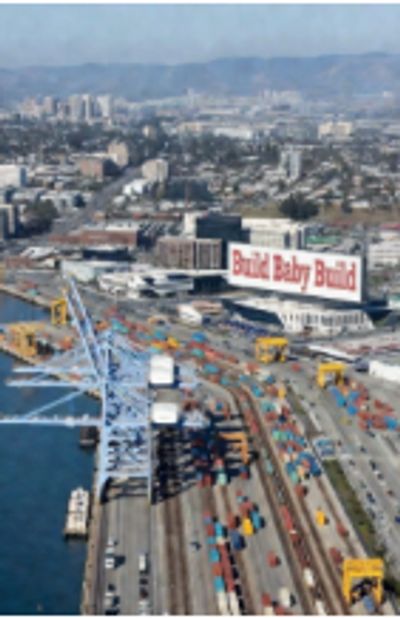
Build Baby Build

Pechenuk To Barbara Lee “ Stop Taxing Us To Death”

Mindy Pechenuk, candidate for Mayor, today delivered a blunt message:


Pechenuk is clear: “Hey Oakland, more taxes is not the solution. Shame on our city officials like Mayor Barbara Lee and her friends!


As reported in The Oakland Report: “Yet Oakland intends to ask voters to give even more. The city appears determined to raise another $40 million in taxes from residents and businesses… That is something akin to taking a second mortgage on your home, based on hoped-for income from a new job that you haven’t even applied for yet.” Read Full Articles


Pechenuk’s message is clear: More taxes = more debt, more poverty, more failure. Her fix is simple, common-sense, and American:

  • Crush crime and open-air drugs  
  • Bring back industry and manufacturing jobs  
  • Unleash small and medium businesses
     

“Growing your economy is the American way. Taxing to cover fraud and debt is globalized slavery.” 


Plans coming soon. “America First. Oakland First.”

Stop Taxing Us To Death

Clown Newsom Goes Full Steroids at Davos – Knee-Pads & All

 Gavin Newsom just burned jet fuel to Davos so he could cry that Europeans are “groveling” at Trump’s feet… then blurted out  “I should’ve bought knee pads for them.”


Hey there, the guy who has spent six years begging Sacramento lobbyists, Hollywood, and the feds for bailouts just called other people grovelers. Projection so strong it needs its own zip code.


Mindy Pechenuk: " California's failed governor is lecturing the world on not hating Trump enough... while globalist puppet strings yank him like a cheap carnival prize. Central bankers laughing in hot tubs? Check. British Empire enjoying every moment? Double check. Results? Still buffering.”


Trump, meanwhile, is busy actually winning:

  • Inflation? Getting curb-stomped
  • Drug cartels & crime? Getting evicted
  • Skilled jobs? Coming back big time
  • American workers & families? Finally breathing again


That’s the 250-year-old America we signed up for. Not Gavin’s sad experiment: no gas,  $100k electric golf carts nobody can charge, businesses ghosting, people U-Hauling to sanity.


Instead go with Mindy for Mayor! Oakland wants JOBS, cheap ENERGY, real SAFETY, and AMERICANS FIRST—like Trump.”      


Vote Mindy Pechenuk for Oakland Mayor 2026.
For more information contact: Gerald Pechenuk, cities12345678@gmail.comFPPC #1480943                          

Gavin Newsom the Globalist Puppet

Gavin Newsom is a Globalist Puppet

Time to Liberate and Rebuild Oakland

Mindy Pechenuk call to action: Unite every neighborhood and rescue the city from collapse.


“We’ve gone too far down the road of rampant drugs and societal degeneration,” Pechenuk declared. It’s time for Oaklanders to reject division, stand together, and rebuild a safe, prosperous, and vibrant city. Our kids deserve a future free from drugs, crime, homelessness, and illiteracy.” Pechenuk redefined “affordability” the American way: massive supply, real ownership, and opportunity for all. She blasted Oakland’s current crisis—sky-high prices for housing almost no one can afford—as the result of decades of restrictive zoning and policies that have choked off new construction.


This is in sharp contrast to the nonprofit-driven community safety and violence prevention approaches linked to Councilmember Carroll Fife and her husband Earl Harper—criticized by opponents running many levels of fraud and scams through her nonprofits, which include housing.
Pechenuk vows to unleash market-driven abundance and personal opportunity


As mayor, she enthusiastically backs President Trump’s aggressive plan to deliver up to 12 million new homes in 10 years through cutting-edge companies like BOXABL’s revolutionary modular construction, slashing outrageous zoning rules, and crushing high interest rates—so young families can own homes again before age 40.


Pechenuk will also utilize the federal Opportunity Zones, converting empty and illegal cannabis warehouses into thriving machine tool shops, 3D printing centers, and modern manufacturing hubs—bringing good jobs and genuine revival to East and West Oakland.


With 2026 marking the 250th anniversary of the Declaration of Independence, Pechenuk says the moment is perfect to reignite America’s core principles: liberty, self-reliance, and opportunity for every citizen.
 

Together, we can make Oakland great again. www.electmindy.com

                                          

Liberate Oakland from the same 'ol failed policies of the woke left

Together We Can Make Oakland Great Again!

Today, I am thrilled to celebrate and to have been a participant in the major victory for the safety and security of Oakland's residents: the successful approval of the Flock camera system by the City Council in a 7-1 vote. As your candidate for Mayor in 2026, I have long advocated for innovative tools like these license plate readers to combat crime, track stolen vehicles, and deter criminal activity that has plagued our streets for too long. This two-year contract for 290 cameras, with the potential for further enhancements, represents a step forward in reclaiming our city from lawlessness.
 

My heartfelt congratulations go to the Coalition for Community Engagement, the Oakland Alliance for Public Safety, Asians Unite, Seneca Scott and all other dedicated Oaklanders who tirelessly fought for this essential public safety measure. It's a testament to what we can achieve when we prioritize evidence-based solutions over excuses, and I pledge to build on this momentum by partnering with law enforcement and the federal government to dismantle drug cartels and open-air markets that fuel violence.
 

My vision for Oakland is one of rebirth through manufacturing and business revival, creating good-paying jobs, fostering economic growth, and restoring our city as a hub of opportunity—not the stagnant, crime-ridden shadow it has become under failed leadership. Unlike Barbara Lee's approach, which has tolerated rising crime and burdensome policies like the new Sunday parking meters that nickel-and-dime hardworking families and small businesses from noon to 6 p.m.
 

I will focus on real solutions that empower our community. No more unnecessary fees and taxes punishing residents; instead, let's invest in infrastructure, incentives for manufacturers, and a business-friendly environment that attracts investment and lifts everyone up.
 

Together, we can make Oakland great again. www.electmindy.com


Mindy Pechenuk at Oakland City Council meeting  12/ 16/25.

credit (Jane Tyska/Bay Area News Group)

The Prophetic Warning of Coach John Beam

 As Oakland's next mayor in 2026, I, Mindy Pechenuk, stand before you with a heavy heart to condemn the utter failure of our current leadership under Mayor Barbara Lee and the Oakland City Council. Their inaction has left our communities vulnerable, ignoring the prophetic warnings of Coach John Beam, the legendary athletic director at Laney College.  


Just one day before his tragic murder on November 13, 2025, Beam spoke out at the "Taco ’Bout Safety" community forum, exposing the dire lack of security on campus. He rightly questioned how just six unarmed guards could possibly cover four sprawling campuses around the clock, especially after the Peralta Community College District's misguided post-2020 policy shifts that terminated the armed Alameda County Sheriff's patrols in favor of under-resourced "safety ambassadors."  

Beam's voice was a clarion call for accountability, yet Mayor Lee and the Council turned a deaf ear, allowing vulnerabilities to fester in the very field house where he was gunned down. This negligence is not abstract—it's a betrayal of trust that has cost us a pillar of our community.


Coach Beam, who mentored thousands of young athletes and inspired a generation through his appearance on Netflix's Last Chance U, highlighted specific failures, like the recent break-in at the field house where security contractors from Diligence Security Group merely observed thefts on surveillance footage without intervening. He decried how the campus "felt less safe" since the 2020 overhaul, a sentiment echoed by 85% of survey respondents who preferred armed protection.  

Under Mayor Lee's watch, these warnings were met with excuses about resource constraints rather than real action, perpetuating a system where unarmed officers lack even the power to make arrests. The Council's complicity in upholding these failed policies has turned Oakland's educational institutions into high-risk zones, culminating in the senseless loss of a man who dedicated his life to uplifting our youth.


How can you have safety, when members of the Oakland City Council are involved in the “no armed guards” and defund the police? Take a careful look at  Oakland City Councilmember Carroll Fife, whose husband, Earl Harper’s unarmed security firm “Community Ready Corps, received a $2.1million contract with Peralta Community College District.


I stand firmly with every Oakland resident who demands the right to live a secure life, free from the shadow of fear cast by this failed leadership. No family should endure the grief we feel today, wondering if their loved one is safe simply walking to class or work. Coach Beam's murder is a stark indictment of policies that prioritize optics over protection. I also stand firm for all students and I support the fight of the Skyline High School students, teachers and parents.


We cannot allow the same indifference that dismissed his pleas to define our future. As your mayor, I will champion comprehensive security reforms, reinstating armed patrols where needed and investing in community-led safety measures that honor Beam's legacy of advocacy and resilience. That is why I call for immediate open hearings and robust public discussions on campus and citywide security—starting now, not after more lives are lost.  


Mayor Lee and the City Council must face the public they have failed, answering for their role in the chain of events leading to this tragedy. No more delays, no more deflections. Together, we will dismantle the outdated policies born of 2020's unrest and build a safer Oakland for all.

Join me now in this fight; vote Mindy Pechenuk for Mayor in 2026, and let's turn mourning into meaningful change.  


Alameda County Grand Jury Results Are In

 This is the the Unmistakable Conclusion of the recent  Grand Jury Report on Oakland's Finances 

Mindy Pechenuk, is calling on all Oaklanders to face the music.


"To put it simply and truthfully, the  mess we are in today is a result of years of bad ideological and corrupt decisions by our leaders."  


In plain talk Oakland cannot sell its bonds.


WHY? Oakland is "un-investable" due to chronic operational failures, mismanagement and theft of funds. Oakland cannot handle basic fiscal issues

.

RESULT: Investors don’t believe they will ever get paid back.


Click here for full Grand Jury Report


Pechenuk concludes with a call for a full audit of Oakland's finances 


"The SOLUTION is a: Full outside audit of all of Oakland finances. We must reach out to the State and Federal government to help with the reorganization of city finances. Oakland has been run by the inept for far too long. It is time to correct the reimaging of Oakland, and set forth a new vision to rebuild Oakland."                                                                                                                                              

The Big Lie

October 24, 2025 Oakland. CA- 


Pechenuk: Calls Out the Big Lie


Mindy Pechenuk testified today, Thursday, October 23, 2025 to the hearing on the Coal Terminal lawsuit.  Pechenuk stated clearly Mayor Barbara Lee and the Oakland City Council are  responsible for losing the city not only tens of millions of dollars in legal fees, but combined with billions of dollars of losses in skilled productive jobs and economic development for all of the residents of Oakland." 


 "All of the money wasted in this lawsuit should have gone into stopping Fentanyl and other illegal drugs that have destroyed the children and the people of Oakland." 


Pechenuk says, " I hold Mayor Barbara Lee accountable for this failure, along with City officials Rowena Brown, Carol Fife, Noel Gallo, Charlene Wang, and Ryan Richardson, who signed the "No Coal Pledge" and promoted the misleading "No Coal Campaign"."


The Big Lie


The "No Coal" campaign relied on the claim that coal would increase asthma rates or worsen existing conditions among West Oakland children, relying on fear-mongering tactics. Besides, there will be other bulk items shipped through this terminal, for example agricultural products.


Think about this: we allow fentanyl to dominate our streets, open air drug markets all over East Oakland which are destroying and killing the lives of our Oaklanders of all ages, but we do not allow for  good jobs and industry to grow in our Oakland, like the Coal Terminal.


The truth is, the coal that would be shipped to the Oakland terminal originates from Utah and Wyoming, often referred to in the industry as "clean coal", as I recently discussed with Congressional staffers in Washington, D.C.


Pechenuk's message is clear: "Never Again" will these "Progressive Fakers" be allowed to lie to the people of Oakland and leave the city bankrupt and the people of Oakland desperate.


Let's start on the Road to a Real Recovery.


Get the drug cartels and open air drug markets off our streets and bring the productive jobs, such as the Coal Terminal can do.


California Miracle

October 24, 2025 Oakland. CA- 


As a candidate for Oakland Mayor 2026, I am waging war for our California children. No longer will we have illiterate children, passing through grades when they cannot write, read, or do math.


Recently I was on a fact finding trip to Washington D.C. and I had the opportunity to speak with many Congressional Offices about the condition of education in California. I had heard of the "Mississippi Miracle" and have had discussions with friends in California about how to bring it home.  In speaking with members of the Mississippi Congressional and Senate Offices I was very impressed with their breakthrough and love for their youth. In 2024 Mississippi adopted the " Literacy-Based Promotion Act" and with programs like "Strong Readers, Strong leaders" Mississippi was able to skyrocket from 49th to the top 20 nationally in education, fueled by phonics, retention, and accountability—all for a mere $9,000 per pupil, exposing our $22,654 per pupil in California  as a shameful scam and an incredible waste of funds.


Yes, California spends $22, 654 on average on each child's education. Oakland Unified, spends about $24,180 per student and only a measly 33% of elementary students read at grade level, and a disgraceful 26% grasp math—way under California’s pitiful 47% and 34% averages 

Join My Fight To Save Our Children


I’m rallying teachers, parents, and patriots across California to crush this evil agenda and save our children’s minds and souls. 


My battle plan Is modeled On Mississippi Miracle. This worked in Mississippi and it will work in California!


  • Hold back every 3rd grader who can’t read at the 3rd grade level. 
  •  In 2013 Mississippi adopted the Mississippi Literacy Act; Strong Readers, Strong Leaders program . 
  • We need now a California Literacy Act. 
  • Deploy teachers and aides immediately for relentless reading and math remediation; 
    mandate phonics statewide; 


Oakland’s youth deserve those God-given creative minds—uniquely crafted in His image to conquer the universe’s mysteries and forge a flourishing society. 

 As President Trump battles failing schools, cartels, and restores American greatness with manufacturing and space exploration, we must rise in Oakland.


 I call on all Oaklanders to Stand with me to eradicate this progressive assault, liberate our children, and build a society of discovery and good. The time for war is now—our kids’ futures demand it! 


VOTE NO ON PROP 50

 Mindy Pechenuk, Oakland mayoral candidate for 2026, is sounding the alarm on Governor Gavin Newsom’s Proposition 50, calling it a dangerous distraction from California’s escalating crime crisis. With unwavering resolve, Pechenuk is mobilizing a grassroots movement to deliver a resounding “NO” vote in the November 4, 2025, special election.


 Her campaign is rallying Californians to send a powerful message: no amount of alleged illegal voting can overcome the will of the people to defeat this proposition. “This isn’t just about redistricting—it’s about stopping Newsom’s political schemes and prioritizing the safety of our communities,” Pechenuk declared.


Proposition 50, backed by Newsom, is a $282 million taxpayer-funded plan that critics, including Pechenuk, denounce as a power grab to entrench Democratic control through mid-decade redistricting. 


While California grapples with rampant crime—fentanyl overdoses, smash-and-grab robberies, and unchecked homelessness—Pechenuk argues that Newsom’s focus on political maneuvering ignores the urgent needs of residents.


 “Families in Oakland and across the state are crying out for real solutions, but Newsom is pouring millions into maps instead of measures like Proposition 36, which voters already approved to tackle crime,” she said.


Pechenuk’s campaign is galvanizing grassroots support to ensure Proposition 50’s defeat is so overwhelming that no alleged voting irregularities could sway the outcome. She warns that Newsom’s policies, including his $23 billion expenditure on free healthcare for undocumented immigrants, have already pushed Medi-Cal to insolvency, further straining resources needed for public safety. “Californians are fed up with Newsom’s misplaced priorities,” Pechenuk stated. “Proposition 50 is a slap in the face to every family desperate for safer streets.”


The stakes, Pechenuk emphasizes, could not be higher. By voting NO on Proposition 50, Californians can reject what she calls a “crime-enabling” agenda and demand accountability from their leaders. Her campaign is building a coalition of voters determined to protect their communities from political overreach and ensure their voices are heard. “This is our chance to stop Newsom’s schemes and take back our state,” Pechenuk urged.


 “Let’s make the opposition to Proposition 50 so massive that no amount of cheating can stand in our way.”


 Together, Californians can send a shot heard round the state by defeating Proposition 50 and putting public safety firs 

Oakland Ranked Third Worst City

September 30, 2025 Oakland, CA-  A shocking new report from WalletHub’s 2025 Best- and Worst-Run Cities in America, released in June 2025, ranks Oakland, California, as the third worst city in the nation. With dismal scores in safety (141st), economy (123rd), financial stability (97th), and infrastructure (94th), the city’s decline is undeniable. Oakland’s theft rate is over 2.5 times the national average, and assaults are nine times higher, while its downtown struggles to recover, with even the iconic Tribune Tower now in loan default.


Mindy has long warned of Oakland’s downward spiral. She points to decades of failed policies under now Mayor Barbara Lee, a 25-year congresswoman, whose support for “woke” progressive Democratic policies, including the job-killing Green New Deal, has left Oakland’s families and economy in tatters. 


As the first announced candidate for mayor in 2026, Pechenuk is outlining a bold vision to restore Oakland’s greatness:


  1. Crack Down on Crime: Dismantle the drug cartel strangling Oakland’s streets to restore safety and security.
  2. Fully Fund the Police: Increase police staffing from the current 500 officers to the needed 800 to protect communities effectively. A remove Oakland ordinances and oversight that is hindering our police from carrying out their duties.
  3. Revive the Economy: Liberate the Port of Oakland from restrictive Green New Deal policies, unleashing thousands of new manufacturing and productive jobs to uplift families and strengthen the city.


“Oakland’s collapse is the result of failed leadership,” Pechenuk said. “I’m running to clean up crime, restore our police force, and bring back real jobs. It’s time to make Oakland the best city in America.”

 

Lee Claims Oakland Crime Down, I Disagree

Oakland is in freefall, ravaged by Mayor Barbara Lee’s catastrophic leadership. The brazen smash-and-grab attacks on two Chinatown banks and a jewelry store in Little Saigon in broad daylight scream of a city abandoned to lawlessness. On top of all this, in the early hours of Sunday, August 25, 2025 a sideshow of200 cars and 500 participants was unleashed in Oakland's 41st and Howe Streets. Leaving a car burning, loud fireworks and a complete scene of rage. 


Devastating Video of Oakland Sideshow

Mindy Pechenuk calls on President Trump to deploy the National Guard now to save our city and all Oaklanders. Our Oakland police need the backup and support.
Crime must be stopped NOW, lives and businesses are being lost. 


Lee’s soft-on-crime policies and outright rejection of President Trump’s call for National Guard intervention expose her utter failure to protect Oaklanders. Mayoral candidate Mindy Pechenuk, running for 2026, condemns Lee’s reckless attacks on Trump, who sees what Lee refuses to acknowledge.


Lee’s inaction leaves residents and businesses defenseless, our streets surrendered to chaos.
Lee’s long-standing support for defunding the police has gutted law enforcement, leaving Oakland’s streets a playground for criminals, fentanyl pushers, and vagrants. Her dismissal of Trump’s National Guard proposal as “fear-mongering” spits in the face of every Oaklander living in fear.
Mindy Pechenuk vows to end this nightmare with unrelenting leadership and a no-nonsense plan to restore order.


Mindy Pechenuk calls on every Oaklander—Democrat, Republican, or independent—to join her 2026 campaign to save our city. Support Trump’s call for the National Guard to crush crime now.
This is a battle for Oakland’s soul and future. 

Mindy Backs Trump’s Homelessness Order

Oakland, CA – In a bold and unapologetic stand for the future of Oakland, Mindy Pechenuk, ecandidate for Mayor in 2026, today unveiled a transformative vision to restore safety, dignity, and hope to the city’s embattled streets. With a clarion call to end the scourge of drugs, homelessness, and human trafficking, Pechenuk is sounding the alarm on decades of failed leadership that have left Oakland’s residents vulnerable and its communities in disarray. Her campaign, rooted in accountability and compassion, promises to prioritize Oaklanders and reclaim the city from the grip of chaos.


“For too long, Oakland has been held hostage by devastating drugs, unchecked homelessness, and the horrors of human trafficking,” declared Pechenuk. “Under the Biden Administration, a staggering 274,224 Americans were left to languish on the streets in a single night—far too many of them in our own city. Over 450,000 children are missing, ensnared in the nightmare of human trafficking. Since 2018, fentanyl alone has claimed 250,000 American lives, including countless Oaklanders. These are not mere statistics—they are our neighbors, our families, our future. This ends now. Oaklanders come first, and human life is non-negotiable.”


Pechenuk endorsed President Donald J. Trump’s groundbreaking executive order, “End Crime and Disorder on American Streets,” hailed it as a historic turning point in the fight to clean up Oakland’s streets. 

  • The order redirects critical funding to move individuals suffering from severe mental illness or addiction into treatment centers, assisted outpatient programs, or other facilities—ensuring they receive the care they need rather than being abandoned to the dangers of street life.
  • It decisively bans discretionary grants from supporting drug injection sites or illicit drug use, protecting vulnerable communities from further harm. 
  • The order also prioritizes the safety of children by prohibiting sex offenders from being housed alongside them in homelessness programs and establishes programs to exclusively shelter women and children, shielding them from exploitation.


“As a candidate for Mayor, I am rejecting the catastrophic policies of Oakland’s so-called ‘ultra-progressive’ leaders, who have allowed our city to descend into chaos,”
Pechenuk stated. “President Trump’s executive order is a lifeline for cities like ours—a bold framework to end the devastation of homelessness and drugs once and for all.


I call on every Oaklander to join me in this fight to reclaim our streets, protect our children, and rebuild a city where safety and opportunity thrive. Together, we will make Oakland a beacon of hope and renewal.”


Oakland comes first. This is not about Republican, Democrat or NPP.

Show your support!

Donate to our campaign today and help us Make Oakland Great Again!

Donate Now

Copyright © 2026 Paid for by Pechenuk for Oakland Mayor 2026 FPPC# 1480943 - All Rights Reserved.

Powered by

  • Home
  • Donate
  • Press Releases
  • Issues
  • Meet Mindy
  • Endorsments
  • Contact Us
  • Gallery
  • Videos

This website uses cookies.

We use cookies to analyze website traffic and optimize your website experience. By accepting our use of cookies, your data will be aggregated with all other user data.

Accept

